Glamping vs camping is the debate every outdoor traveler runs into sooner or later: do you haul your own tent and stove into the woods, or book a furnished tent with a real bed and wake up to coffee already brewing? Both get you fresh air and starry skies, but they suit very different budgets, comfort levels and travel styles — and picking the wrong one can turn a great trip into an expensive or miserable one.
This guide breaks the choice down piece by piece. We’ll compare the core differences and price gap between the two, run a full cost breakdown including gear you’d need to buy, look at what each stay demands in comfort and skill, match each option to the right destinations, and cover booking strategy with timing and minimum-stay tips. We’ll finish with a quick decision guide so you can tell at a glance which stay fits your next trip.
Glamping vs Camping: The Core Differences at a Glance
At its simplest, camping means you bring everything yourself: a tent, sleeping bag, pad and a stove for cooking. You arrive at a campground or backcountry site, set up your shelter and build your stay from scratch. Glamping flips that equation — you book a pre-set structure, whether that’s a safari tent, cabin or dome, and it comes with real beds, furniture and often electricity already in place.
The facilities differ just as much. Glamping typically includes en-suite or shared bathrooms, heating and furnished interiors, so you’re never far from a hot shower. Traditional camping relies on whatever the campground offers, which can range from decent washroom blocks to a basic pit toilet and nothing else.
The price gap is real
Tent sites typically run $15-$60 per night in the US, while glamping units typically range $150-$450 per night, with luxury safari tents climbing even higher. That’s often a tenfold difference for the same patch of scenery.
So what are you paying for? Camping rewards self-reliance and flexibility — you can change plans, cook what you like and go where glamping infrastructure doesn’t exist. Glamping trades that independence for comfort and zero setup: no pitching, no packing gear, no sleeping on the ground.
Cost Breakdown: What Each Option Really Costs
The real cost comparison starts before you ever book a campsite. A basic camping starter kit costs around $300-$600 for two people — tent, sleeping bags, pads, stove, cooler and cookware. Glamping, by contrast, requires no gear purchase beyond personal clothing, but nightly rates typically range $150-$450, so the upfront and ongoing costs work very differently for each option.
Do the math on a short trip and glamping often loses: a 2-night glamping stay can easily cost more than the entire camping kit you’d use for years. But camping gets cheaper the longer you stay, since your gear is a one-time investment and nightly fees stay low. Glamping costs scale linearly — every extra night adds the full rate, no matter how many nights you’ve already booked.
Timing matters too. Shoulder season in May and September offers lower rates and fewer crowds at both types, so the same tent or lodge often costs noticeably less than in peak summer.
- Gear quality matters: spending toward the top of the $300-$600 range on a good tent and sleeping bags usually pays off over multiple trips, while the cheapest kit tends to wear out fast.
- Hidden camping costs: factor in fuel for the drive, ice, propane canisters and any campground reservation fees, which can add a meaningful amount to a week-long trip.
- Glamping extras: some lodges charge separately for meals, activities or cleaning fees, so check what the nightly rate actually includes before comparing it to a campsite.
- Splitting the difference: borrowing or renting camping gear for a first trip lets you test the hobby without committing the full $300-$600 upfront.
Comfort, Gear and Skill: What Each Stay Demands of You
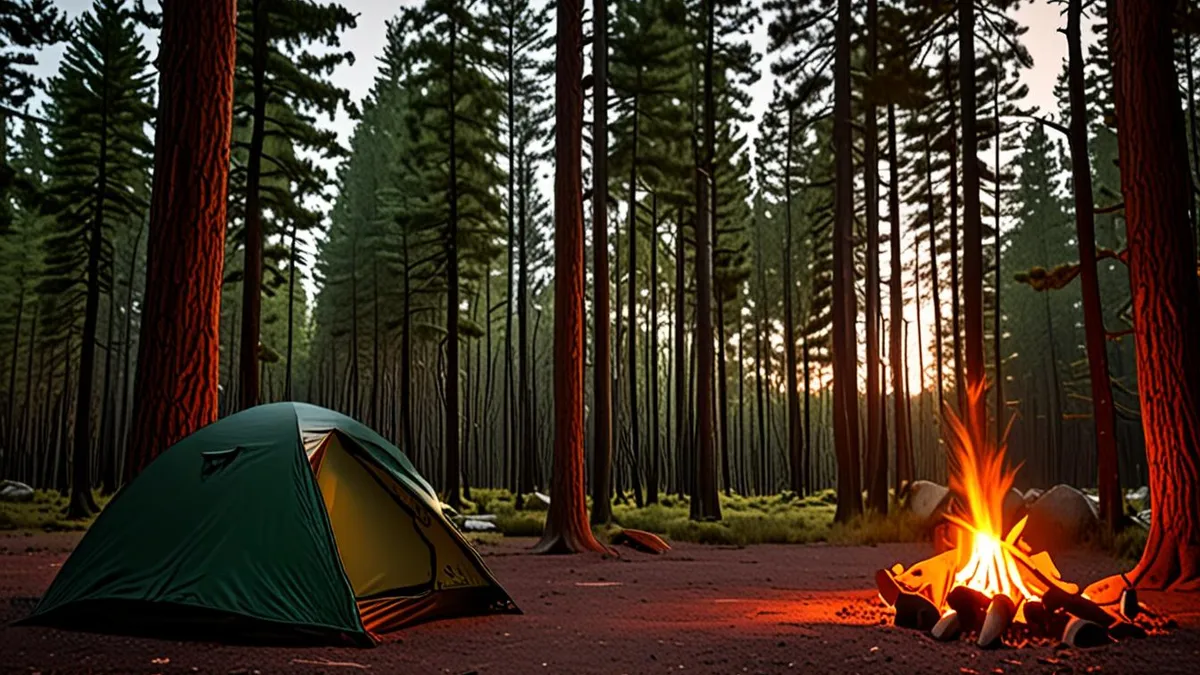
Camping asks more of you from the moment you arrive. You’ll pitch a tent, figure out the stove, and manage cold nights with the right sleeping bag and layers. Weather is your responsibility too — a rainstorm means checking guylines, keeping gear dry and knowing when to wait it out rather than push on.
Glamping strips almost all of that away. You bring personal clothing and nothing else: the real beds, heating and lighting are already in place when you walk in. There’s no setup on arrival and no teardown when you leave, which is why glamping requires no gear purchase at all.
The learning curve is real for first-timers
First-time campers should expect a learning curve with camp cooking, packing and weather-proofing. Your first few trips will involve burnt pancakes, over-packed coolers and at least one night of guessing how warm “ratings” actually feel. It gets easier fast, but go in knowing trip one is a practice run.
Glamping suits travelers who want the outdoors without giving up a proper mattress or a morning coffee setup. If waking up stiff, cooking over a single burner and brushing your teeth in a campground washroom sounds like a chore rather than an adventure, a furnished tent gives you the scenery and fresh air with none of the friction.
Where Each Option Shines: Matching Stay Type to Destination
Location is often the deciding factor, because the two stay types simply exist in different places. Traditional camping excels in remote national parks and backcountry areas where there is no glamping infrastructure at all. If your goal is a trailhead in a lesser-visited corner of a big park, a tent site may be the only option besides a long drive to a lodge.
Glamping, on the other hand, clusters near scenic regions with resort-level demand. Think forest safari tents a short drive from wine country, coastal domes overlooking the ocean, or canvas cabins on the edge of popular national parks. Operators build where travelers already want to go, so you rarely find a luxury tent deep in the wilderness.
Jungle and tropical destinations
Jungle and tropical settings pair especially well with high-end tented lodges that blend luxury with immersion. Places like Ubud in Bali have perfected this format, and you can see it in properties such as Ritz Carlton Reserve Mandapa, a jungle retreat in Ubud, where open-air design puts you right in the landscape without sacrificing comfort.
Alpine and lakeside trips
Alpine and lakeside campgrounds tend to favor traditional tent camping, mainly because tents put you closest to the activities. You can wake up, step out of your tent, and be on a hiking trail or at the water’s edge within minutes. Check with the local park or campground operator for current site availability and fees, since these vary by destination and season.
How to Book: Timing, Minimums and Peak-Season Strategy
Getting the stay you want is mostly about timing. Both campgrounds and glamping lodges sell out their best dates well in advance, but they work on slightly different schedules. Glamping lodges in popular regions often require booking 3-6 months ahead for summer dates, while campgrounds tend to release sites on a fixed schedule that rewards early action. Here’s how to plan your booking so you’re not left refreshing a booking page at midnight.
- Book glamping 3-6 months ahead for summer dates. Popular lodges sell out first, and the most photogenic units — the oceanfront dome or the treetop cabin — often go before anything else. If you have a specific unit in mind, reserve the moment your dates are open, and read the cancellation policy carefully before paying.
- Reserve campgrounds as soon as the booking window opens. For peak season, which runs roughly June through August in the Northern Hemisphere, reservations at well-known parks can fill within days of release. Mark the release date on your calendar and book online that morning. Sites near lakes and trailheads usually go fastest.
- Plan around weekend minimums. Many glamping sites cap stays at 2-3 nights minimum on weekends, so a one-night weekend getaway usually isn’t possible. Either commit to the full minimum or shift your stay to a weekday, when rules tend to be more flexible and availability is better.
- Aim for shoulder season if your dates are flexible. May and September are the easiest months to book and the cheapest for both options, with lower rates and fewer crowds. You get the same scenery without the competition for sites.
One last tip: set a reminder a few days before your target booking window opens, and have backup dates ready. Flexibility of even one day on either side of your ideal weekend can make the difference between a booked-out park and an open site.
Who Should Choose Which: A Quick Decision Guide
If you’re still torn, match the stay to your budget, your travel companions and how remote you want to go. Choose camping if you’re watching every dollar, you genuinely enjoy cooking outdoors and you want remote locations that glamping simply doesn’t reach. Choose glamping if you’re celebrating something special, traveling with someone who won’t sleep on the ground, or short on time to plan and pack gear. A quick look at who you are as a traveler usually settles the question, and it’s worth being honest about how much comfort you actually need after a long day outside.
- Families with young kids: Glamping is often the easier first outdoor trip. Kids get real beds and a proper bathroom, parents skip the tent-pitching stress, and everyone still gets the campfire-and-stars experience.
- Solo adventurers and hikers: Traditional camping usually delivers more value. You’re out on the trail all day anyway, so paying for heating and furnished interiors buys little, and a tent site keeps your per-night cost low.
- Couples on a milestone trip: Glamping wins here. An anniversary or honeymoon calls for the kind of stay where a real mattress, lighting and a private bathroom make the celebration feel effortless.
- First-timers short on time: Glamping removes the gear problem entirely — beyond personal clothing, there’s nothing to buy or pack. That saves both the money a starter kit would cost and the hours of research it takes to assemble one.
The Bottom Line on Glamping vs Camping
So which one fits your trip? The honest answer is that neither option wins outright; each one simply suits a different kind of traveler and a different kind of night away. If you love the process of setting up camp and don’t mind roughing it a little, a tent will reward you with freedom and flexibility. If you’d rather skip the setup entirely and wake up rested, a pre-furnished glamping unit does the work for you.
Timing matters either way: book months ahead for peak season, or aim for May and September when rates drop and crowds thin out. In the end, your decision comes down to three things: your budget, your comfort threshold and just how far off the beaten path you’re hoping to sleep. Weigh those against each other and the right answer usually becomes obvious. If this helped you decide, leave a comment or share the article with a friend planning their next outdoor stay.