You love the idea of falling asleep under the stars, but the reality of camping gives you pause. Thin tent walls, a sleeping bag on lumpy ground, and a walk to a shared bathroom in the middle of the night? Not exactly your idea of a getaway. That gap between the dream and the discomfort is exactly what glamping was invented to close. So, what is glamping? Short for “glamorous camping,” it pairs the outdoor setting you crave with real beds, heating or cooling, electricity, and often a private or en-suite bathroom.
This beginner’s guide walks you through everything you need to know before you book. We’ll define glamping properly, compare it with traditional camping and boutique hotels, and break down the main types of accommodation, from safari tents and yurts to geodesic domes, A-frames, treehouses, and cabins. You’ll also find honest guidance on costs, the best time to go and how to book, a practical packing list for your first trip, and a few questions to help you decide whether glamping is right for you.
What Is Glamping, Exactly?
Glamping is short for “glamorous camping,” and it describes a simple idea: accommodation that is already set up and furnished before you arrive. Instead of hauling gear to a campsite and pitching a tent in the dark, you drive up, unlock the door, and find a ready-made space waiting for you. The tent, dome or cabin is the hotel room; the wilderness is the lobby.
The key difference from traditional camping comes down to what you don’t have to do. There’s no equipment to buy, carry or assemble, and no tent pegs to fight with. Inside, you’ll typically find a real bed, electricity, and heating or cooling, with a private or en-suite bathroom at many sites. In other words, the comforts that define a hotel stay are built into a structure that sits in the middle of nature.
What you’ll actually sleep in
Glamping structures come in several shapes, from safari tents and yurts to geodesic domes, A-frames, treehouses and cabins. Most are designed for couples or small groups, with the majority sleeping 2-4 guests and family units accommodating up to 6. Sizes and layouts vary widely between sites, so it pays to check the details of a specific unit before booking.
The easiest way to think about glamping is as a middle ground between a hotel and a campsite. You get the nature immersion of a campsite: waking up to birdsong, stepping onto a deck surrounded by trees, watching the stars without city light interference. But you also get hotel-style comfort underfoot and overhead. It’s camping with the hard parts removed, which is exactly why it appeals to travelers who love the outdoors but not the gear list that usually comes with it.
Glamping vs Camping vs a Boutique Hotel
The money and effort equation
Traditional camping looks cheap until you add up the gear. A decent tent, sleeping bags, sleeping pads, a stove and a cooler can easily run past $500 before you’ve spent a single night outdoors. Then there’s the setup: arriving at the site, pitching the tent in fading light and inflating mattresses while dinner waits.
Glamping flips that trade-off. You show up to a fully furnished structure with the bed already made, but you pay hotel-style rates for it — typically somewhere in the $100 to $600+ range per night, compared with the roughly $20-50 you’d pay for a standard campsite. If you camp a few times a year, the gear pays for itself. If you’re an occasional outdoors visitor, glamping is usually the cheaper path once you count equipment costs and your time.
How it compares to a boutique hotel
Against a boutique hotel, glamping trades service for space. You give up daily housekeeping, a front desk and often on-site dining, and in return you get privacy, open skies and a direct line to nature — stepping out of your door onto grass rather than a corridor. There’s no lobby, no elevator, no neighbor two feet beyond the wall.
One honest caveat: canvas and fabric walls don’t insulate like a sealed hotel room. Most glamping units have heating or cooling, but you’ll still feel the seasons more than you would behind double-glazed hotel windows — a cold snap or a hot afternoon registers more strongly in a yurt than in a city hotel.
The simplest way to decide: if the outdoors itself is the attraction, choose glamping. If comfort, service and climate control matter most, book the hotel.
Types of Glamping Accommodation
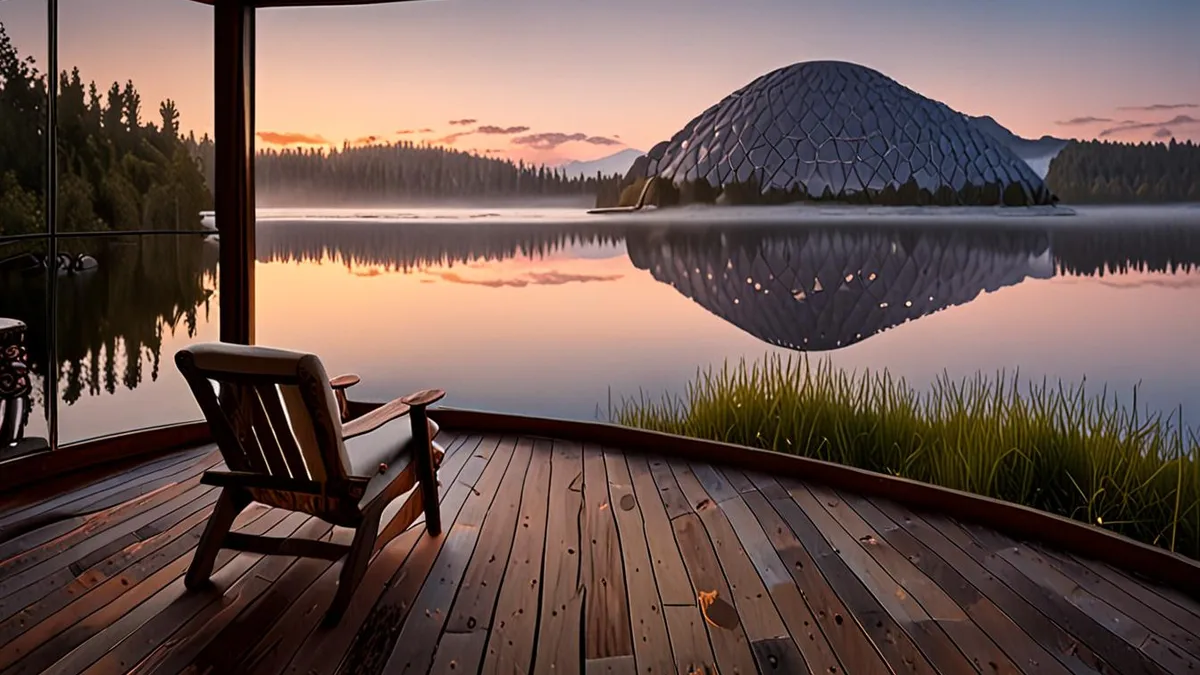
Glamping comes in more shapes than most beginners expect, and the structure you choose shapes the whole experience. Safari tents are the classic image most people picture first: large canvas units stretched over sturdy frames, set on raised wooden decks, often with a proper en-suite bathroom at the back. Geodesic domes and A-frames are the modern end of the spectrum, all sharp design and panoramic windows, which makes them a favorite for couples celebrating something. Yurts and bell tents are the round, cozy option, drawing on centuries of nomadic tradition, and they usually sit at the most affordable tier of the price range. Treehouses and cabins are the most solid choice of all, built like small weatherproof rooms lifted into the trees.
Each type trades off space, weather protection and price a little differently, so it helps to know the specifics before you book:
- Safari tents typically include a covered deck with lounge chairs, so you effectively get an outdoor living room in addition to the sleeping area.
- Geodesic domes often place the bed directly under or facing the curved window, making stargazing from bed one of their biggest draws.
- Yurts usually feature a central dome skylight and circular layout, with family units that can sleep up to 6 guests.
- Bell tents are the simplest setup, often with shared bathroom facilities rather than en-suite ones, which is part of why they cost less.
- Treehouses and cabins are the closest to a small hotel room, with solid walls, insulation and less temperature swing than canvas structures.
How Much Does Glamping Cost?
Glamping prices span a wide range, but the good news is that entry points exist for almost every budget. At the lower end, a basic yurt or bell tent in a rural area typically runs around $100-150 per night. These simpler structures still give you a real bed and shelter, just with fewer frills and often shared bathroom facilities.
Mid-Range and High-End Stays
The mid-range is where glamping starts to feel genuinely luxurious. Safari tents and geodesic domes with private bathrooms typically run $200-350 per night. At this level you can expect en-suite facilities, proper heating or cooling, and furnished decks that make the most of the setting.
At the top of the scale, high-end treehouses and resort-style glamping in scenic regions can exceed $600 per night. These properties often rival boutique hotels in design and amenities, adding extras like hot tubs, chef-prepared meals or guided activities to justify the premium.
One detail that catches many first-timers off guard is the minimum stay requirement. Many sites require a 2-night minimum on weekends, which effectively doubles the entry price for a short trip. A tent that looks like a $150 getaway becomes a $300 commitment once the minimum applies. Always check the booking terms before you fall in love with a listing, and factor the full stay cost into your comparison with hotels.
When to Go and How to Book
Glamping availability follows a simple rule: the best sites and dates go first. Unlike a large hotel with dozens of rooms, most glamping properties are small, often just a handful of safari tents, domes or yurts on a single property. That means a single busy weekend can wipe out an entire calendar, especially in scenic regions where demand outstrips supply. Planning your timing well matters more here than it would for a typical hotel stay, where you can usually find a room even at short notice.
- Decide your season first. Peak season in most US and European destinations runs May to September, when the weather is at its best and prices are at their highest. If your dates are flexible, shoulder months like May, early June and September offer milder prices and fewer crowds with still-pleasant conditions. You’ll also find more structure types available, since some sites only open their full range during the warmer months.
- Book peak-season weekends 3-6 months ahead. The most sought-after sites often sell out around 6 months out, so waiting until a few weeks before a summer Saturday usually means choosing from whatever is left rather than what you actually want. If a specific dome or treehouse caught your eye, assume someone else is eyeing it too.
- Consider midweek if you’re booking late. Midweek stays are easier to secure last-minute and usually cheaper than weekends. If your schedule allows a Monday-to-Wednesday trip, you can often book the same popular sites that are impossible on a Saturday night, and you’ll share the property with fewer neighbors.
- Read the minimum-stay rules before committing. Weekend bookings frequently carry a 2-night minimum, so check the terms while you’re comparing dates rather than after you’ve picked a favorite. A site that looks affordable per night can double in cost once the minimum applies.
A little lead time goes a long way. Set a reminder for when booking windows open at your chosen site, and you’ll have the full range of structures and dates to choose from instead of the leftovers. If you miss the window, don’t give up entirely: cancellations do happen, and some sites keep waitlists worth joining. Flexibility on dates or structure type is often all it takes to still get a great stay.
What to Pack for Your First Glamping Trip
Packing for glamping is refreshingly simple, because the whole point is that the heavy lifting is done for you. There’s no tent, sleeping bag, stove or lantern to bring. What you do need is a bit of thought about how canvas buildings behave and how sites are laid out.
The biggest shift from camping thinking is clothing. Canvas structures heat up noticeably by day and cool down quickly at night, so layers are your best friend. Bring a light option for warm afternoons and a warm layer, plus socks, for evenings on the deck. Skip the camping gear aisle entirely; nothing on a standard glamping packing list requires equipment you’d only use once.
A few items earn their place every time:
- Closed-toe shoes. Sites are often on grass, gravel or woodland paths, and you’ll be walking outside to reach bathrooms, dining areas or your car, sometimes in dew or rain.
- A flashlight or headlamp. Lighting between structures is usually dim by design, so a hands-free headlamp makes nighttime trips far easier.
- A power bank. Outlets in your unit may be limited, and a charged phone matters more when you’re relying on it for maps and booking confirmations.
- Insect repellent and personal toiletries. Not every site stocks them, and being in nature means being near bugs.
Finally, sort out food and drink before you arrive. Confirm whether your unit has a kitchenette or grill, or whether there’s a restaurant on site or nearby. Rural locations can mean a long drive to the nearest store, so plan meals accordingly.
Is Glamping Right for You?
If you love the idea of falling asleep to crickets and waking up to birdsong but dread thin tents, shared bathrooms and hauling gear, glamping solves exactly that problem. You get real beds, private or en-suite bathrooms, electricity and heating or cooling, all wrapped in a structure that puts nature right outside your door. Prices run from about $100 to $600+ per night depending on the structure and location.
Success comes down to matching the details to your comfort level: pick a treehouse or cabin if you want maximum weatherproofing, a yurt or bell tent if you’re on a budget, or a dome for the views. Aim for the shoulder months if you want quieter trails and softer prices, and book 3-6 months ahead for May-September weekends. Pack layers rather than gear, and your first luxury camping trip should feel effortless. Have you tried glamping yet? Share your experience or questions in the comments below.