Choosing between a maldives overwater villa and a beach villa is the first big decision of any trip here, and it trips up almost everyone booking for the first time. The photos of decks hanging over turquoise lagoons are tempting, but the premium is real, and for many travelers a villa on the sand is the smarter pick. The trick is knowing which one fits your budget, your season and the way you actually spend your days.
This guide breaks the choice down piece by piece. We cover what an overwater villa actually delivers, why beach villas win for many travelers, what the price gap buys you, and how weather shifts the value of each. Then we match villa types to traveler profiles, share practical booking strategy around timing and transfers, and finish with a simple framework for making the final call.
What an Overwater Villa Actually Gets You
The core appeal of an overwater villa is simple: your private deck ends at a ladder, and below it sits a clear lagoon usually 1.5-2.5 m deep. You can slip straight into the water for a swim before breakfast, then dry off on your own sun loungers without walking anywhere. Most decks face open water toward either the sunrise or the sunset side, so you get that wide, uninterrupted horizon that photos rarely do justice.
Seclusion is the other big draw. Villas are spaced along jetties rather than lined up side by side, so neighbors tend to be out of sight and earshot. From your deck, the view is ocean in one direction and nothing else, which is hard to replicate in a garden villa on a small island.
The trade-offs to weigh
Overwater villas have no direct beach access, so if you want to feel sand under your feet you will walk to the island’s beach area. Sun exposure is another factor: decks sit in the open, and midday heat can make them uncomfortable without shade. Finally, if your villa sits near the start of the jetty or along the main walkway, you may hear and see other guests passing by, which erodes some of that privacy you paid for. Asking for an end-of-jetty position at booking helps.
Why a Beach Villa Wins for Many Travelers
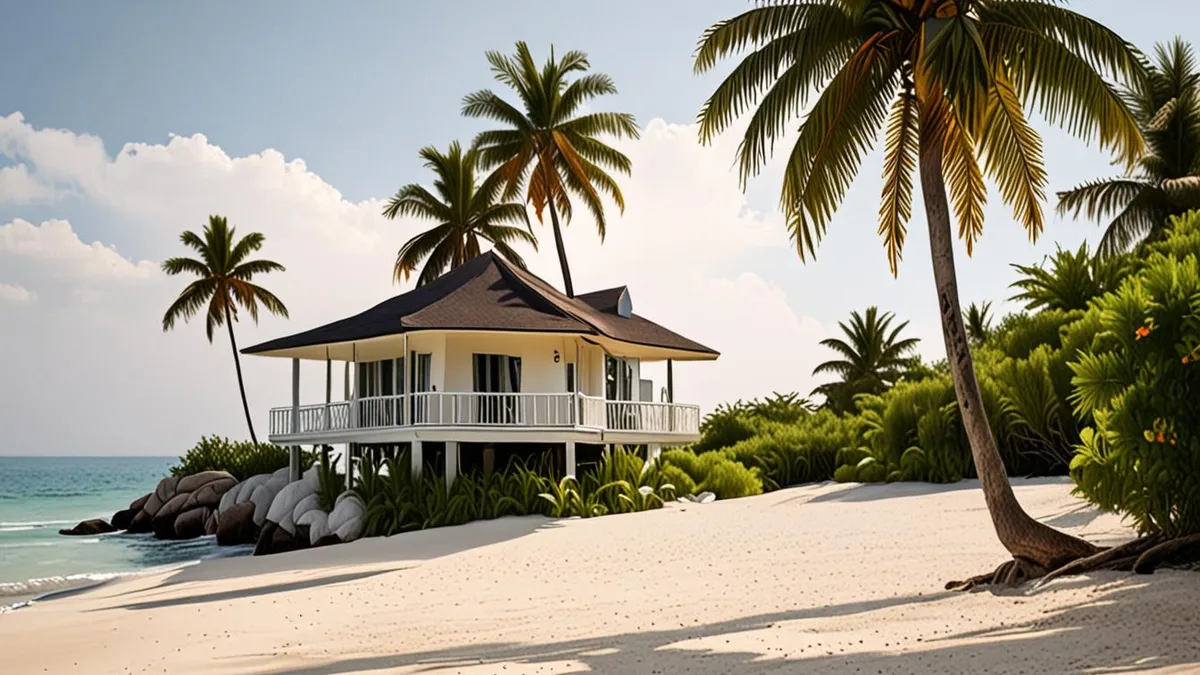
Beach villas give you something an overwater deck cannot: direct steps from your terrace onto the sand. Entry-level categories are often 60-100 sqm and usually come with a private garden or plunge pool, so you get genuine outdoor space without paying the overwater premium. You can read under a palm, wander to the water, and come back without thinking about it.
Shade and family practicality
Palms and vegetation around beach villas provide natural shade through the day, which makes a real difference in the midday heat. For families with small children, this layout is simply easier: toddlers can play on the sand and in the shallows under supervision, while lagoon ladders off an overwater deck are off-limits for young kids. A garden also gives children room to roam without you watching the water every second.
The house reef advantage
On coral-ringed islands, the snorkeling drop-off often sits just 10-50 m from shore, frequently right in front of the beach villa blocks. That means you can snorkel the house reef several times a day without a boat trip or a long walk. For anyone who travels to the Maldives primarily to get in the water with fish and coral, a beach villa near the reef edge is often the better base, not the budget option.
Price Gap: What the Overwater Premium Buys
The overwater premium is significant: expect to pay 30-60% more for an overwater villa than the equivalent beach category at the same resort. On a week-long stay, that difference can cover a decent chunk of your flights, so it deserves honest scrutiny rather than a shrug. The good news is that the premium is not fixed. In the wet season from May to October, rates drop 20-40%, which puts overwater categories within reach of travelers who could not justify them in high season. Shoulder months can also soften the gap, so it pays to price several date ranges before you commit.
How you weigh the premium depends on the trip you are planning. A short honeymoon is a classic once-only splurge where the overwater experience may be worth every extra dollar. A longer stay, or a trip with kids, often gets more use out of beach space, shade and garden room than a deck over the lagoon. Think honestly about how many hours you will actually spend in the room: if your days are filled with diving, excursions and meals, the cheapest comfortable category may serve you better than the postcard one.
Two practical checks help. First, ask whether the resort runs promotions that bundle meals or transfers into higher categories, since the effective gap can shrink. Second, remember that size matters less than you think: overwater villas usually start around 80-120 sqm, while entry-level beach villas often sit at 60-100 sqm, so compare layouts rather than labels.
- Split your stay: some resorts let you book a few overwater nights followed by beach nights, so you pay the premium for the highlight rather than the whole trip.
- Compare within one resort first: the gap between categories varies widely between resorts, so check the actual difference for your dates before ruling either way.
- Watch what is included: higher categories sometimes bundle half-board or transfers, which can shrink the effective premium once you price the total stay.
Season and Weather: When Each Villa Type Shines
The Maldives has two broad seasons, and they shape how much you will actually use each villa type. From November to April, the dry season brings less rain and calmer seas. This is when an overwater villa performs at its best: the deck stays sunny, the water below is glassy, and swimming straight off your private ladder into the lagoon feels effortless.
From May to October, the wet season changes the equation. Wind picks up, rain showers roll through in bursts rather than all day, and overwater decks can sit unused for stretches of the day. During these months, the value shifts toward shaded beach villas, where palm cover and indoor space matter more than an open deck facing the water. As a bonus, wet season rates drop noticeably, which softens the blow of any weather you do get.
Shoulder months: the quiet sweet spot
April and November sit between the two seasons and often balance good weather with softer pricing. Seas are generally calmer than in peak wet months, yet rates sit below dry-season highs. If you want a reasonable chance of deck weather without peak-season prices, these shoulder months are usually the smartest window to target.
One practical note: weather in the tropics is never guaranteed, even in the dry season. A short tropical shower can pass through in January just as easily as a sunny spell can break through in September. Plan your villa choice around the odds, not certainties, and you will rarely be disappointed.
Choosing by Traveler Type: Honeymoon, Family, Snorkeler
Match the villa to who is actually traveling, and most of the decision makes itself. Honeymooners usually want the iconic overwater experience, and it is worth having at least once. A popular compromise is to book one or two overwater nights combined with beach nights, so you get the ladder-into-the-lagoon photos without paying the premium for a whole week. Many resorts will also combine categories within a single stay if you ask at booking.
Families with small children are generally better served by a beach villa. Steps straight onto sand mean no ladders, no open water at the deck edge, and space for kids to play while parents relax. Note that many resorts set minimum-age rules for overwater categories, so check these before you fall in love with a specific villa type.
Snorkelers and divers should think differently again. On coral-ringed islands, the best house reef snorkeling is typically found in front of beach villas, where you can slip into the water straight from your own stretch of sand and reach the coral within a short swim, without walking to a jetty or joining a boat trip.
- Honeymooners: ask whether the resort offers a honeymoon perk package, as many include a special dinner or in-villa experience when you mention the occasion at booking.
- Families: entry-level beach villas at 60-100 sqm with a private garden or pool give children room to roam while adults keep an eye on them from a lounger.
- Snorkelers: request a beach villa positioned closest to the reef when booking, since the swim out to the coral can vary noticeably around an island.
Booking Strategy: Timing, Transfers and Room Position
Getting the right villa at the right price is mostly about timing your booking and being specific about what you want. The Maldives resort market rewards travelers who plan ahead and communicate clearly, and a few practical steps will get you there without stress or last-minute compromise.
- Book early for high season. For November-April travel, aim to reserve 6-11 months ahead, when the best villa categories and orientations are still available. For May-October stays, 3-6 months is often enough, and lower demand works in your favor.
- Match your transfer to your arrival time. Most resort islands sit 25-60 minutes from Male airport by seaplane or speedboat, but seaplanes fly roughly 6am-4pm. If your international flight lands late, look for a speedboat-access resort or plan an overnight near Male before transferring. Confirm transfer arrangements with your operator when you book, since schedules can shift.
- Request your villa position. End-of-jetty overwater villas offer more privacy and better views but mean a longer walk to restaurants and facilities. Villas closer to the main walkway are more convenient but see more foot traffic. Ask at booking rather than at check-in, when choices are limited.
- Specify orientation. Ask for a sunset-facing villa if evening light matters to you, since not all overwater villas face the same way. Sunrise-facing options can suit early snorkelers and travelers who prefer cooler decks in the afternoon.
Put these requests in writing when you book, and confirm them again a couple of weeks before arrival. Resorts do their best to accommodate early, specific requests, but nothing is guaranteed until you check in, so flexibility always helps. If a particular view or position matters more to you than the villa category itself, mention that too, because resorts can often solve it with a simple reassignment.
Overwater Villa or Beach Villa: Making the Final Call
So which one should you book? If the lagoon-ladder experience is the reason you’re going to the Maldives at all, an overwater villa delivers it, and you’ll pay a 30-60% premium for the privilege. It shines brightest in the dry season from November to April, when calm seas and sunshine make that private deck worth every extra dollar.
A beach villa, on the other hand, gives you direct sand access, natural shade and often the best house reef snorkeling, all at a lower price. It also holds up better during the May to October wet season, when wind and rain can leave an overwater deck sitting unused. In the end, the right choice comes down to your budget, the season you’re traveling and who’s coming with you. If this helped you decide, leave a comment or share the article with someone planning their own Maldives trip.