Glamping promises luxury in nature, but forgetting one key item can turn a stylish escape into a stressful one. There’s a big difference between sipping wine on a deck at sunset and shivering in a tent because you left your fleece at home. Figuring out what to pack for a glamping trip is trickier than packing for a hotel or a campsite, because every site is different: some are fully equipped lodges, others are canvas tents with bare essentials.
This complete checklist walks you through everything, step by step. We start with the most important move: checking what your glamping site actually provides before you pack a single bag. From there, you’ll find a clothing checklist built around big day-to-night temperature swings, toiletries suited to nature stays, practical gear and gadgets worth the space, food and kitchen extras, and seasonal adjustments for summer versus shoulder season trips. By the end, you’ll pack lighter, smarter and with far fewer surprises.
Before You Pack: Check What Your Glamping Site Provides
The single biggest packing mistake glampers make is duplicating what’s already in the tent. Most glamping sites provide bedding, towels and basic kitchenware, so hauling your own duvet and saucepans from home usually means wasted car space. A quick email or a read of the site’s FAQ page can save you half a suitcase.
The second thing to confirm is how you’ll cook and eat. Some units come with a full kitchen, others offer nothing more than a fire ring, and a few sites have a shared communal kitchen or an on-site restaurant instead. This changes your food list dramatically, so ask before you shop.
Comfort levels vary just as much. A safari tent with electric heating is a very different proposition from a yurt with a wood stove, and it affects what you pack for the evenings. Before booking, run through questions like these:
- Bedding and towels: ask if linens are made up on arrival or left in a bag for you to fit yourself, and whether extra blankets are available for cold nights.
- Cooking setup: confirm whether there’s a stove, BBQ or fire pit, and whether cookware, utensils and a kettle are included or need renting.
- Power and climate: check if the unit has electricity, heating or air conditioning, and whether outlets are inside the tent or only in a shared building.
- Bathroom arrangements: find out if you have an en-suite bathroom or walk to a shared shower block, since this affects towels and toiletries.
One last practical note: summer weekends at popular sites book out fast. Aim to reserve your stay 2-3 months ahead to secure your preferred dates, especially for peak season.
Clothing Checklist: Dressing for Day-to-Night Temperature Swings
Even in high summer, glamping nights get cold. Temperatures can drop 10-15°C below daytime highs, and across a full day you can easily face a 20°C swing between afternoon warmth and evening chill. The fix is simple: pack layers you can add and shed rather than one heavy jacket you’re stuck with.
Think in three parts. A light base layer for the day, a warm midlayer like a fleece for evenings from May through October, and an outer shell for wind and rain. That combination covers you from a sunny afternoon on the deck to a cool night around the fire pit.
Don’t trust the forecast blindly. Even if rain isn’t predicted, a waterproof jacket earns its place in the bag, because weather in rural and mountain areas shifts quickly. The same goes for footwear: sturdy closed-toe shoes handle gravel paths, wet grass and uneven ground far better than sandals. A few specifics worth adding to your list:
- Warm hat and socks: evenings around the fire still leave your head and feet exposed, and wool socks make cold nights in a canvas tent far more comfortable.
- Quick-dry daytime clothes: choose synthetic or merino fabrics over cotton, which stays damp and cold if you get caught in a shower or work up a sweat on a hike.
- Comfortable slip-ons: easy sandals or slides are handy for trips to shared bathrooms or stepping outside the tent at night.
- One smart-casual outfit: if your site has an on-site restaurant or resort-style evenings, a single dressier outfit covers dinner without eating your luggage allowance.
Pack with the swing in mind and you’ll never spend an evening choosing between sweating and shivering.
Toiletries and Personal Care for Nature Stays
Glamping bathrooms come in every form, from en-suite wet rooms to a shared shower block at the edge of the field. That variety shapes your toiletry bag more than anything else. If bathrooms are shared, bring biodegradable soap and shampoo, which are kinder to the septic systems and natural ground many sites rely on, and carry them in a hanging toiletry bag or a small caddy that’s easy to take to the showers.
Insects deserve a spot on the list too, especially for trips between May and October when mosquitoes and midges are most active. Pack insect repellent and an after-bite cream so a few itchy welts don’t ruin your evening on the deck. Apply repellent before dusk rather than waiting until you’re already being bitten.
Sun is the other half of the equation. Glamping life happens outdoors, often on exposed decks, lakesides or hiking trails, so high-SPF sunscreen is a daily essential rather than a beach-only item. Reapply through the day, since a morning coating rarely survives a full afternoon outside. A few extras that earn their space:
- Lip balm with SPF: lips burn and crack fast in open air, and few things are more annoying on a trip.
- Moisturizer: mountain and lakeside air tends to be dry, and skin that feels fine at home can tighten up after two nights outdoors.
- Quick-dry towel: even if towels are provided, a compact microfiber one is useful for swimming, sweaty hikes or damp weather.
- Basic first-aid bits: blister plasters, antiseptic wipes and painkillers cover the small scrapes and headaches that come with outdoor days.
- Hand sanitizer: handy for picnics, fire-pit snacks and moments when the nearest sink is a walk away.
Practical Gear and Gadgets Worth Bringing
Even the most luxurious safari tent can feel surprisingly dark once the sun goes down, and paths between your unit and the bathroom are rarely lit like a hotel corridor. A headlamp solves this instantly, keeping both hands free for unzipping doors or carrying a glass of wine. If your unit has electricity, you might get away with a small lantern, but a headlamp is the safer bet for late-night bathroom runs.
Power is the other common surprise. Many glamping units have an outlet or two, but they may be far from where you actually want to sit, and sites in remote areas can have limited or unreliable supply. A portable power bank keeps your phone, camera and e-reader charged without you having to hover near the wall.
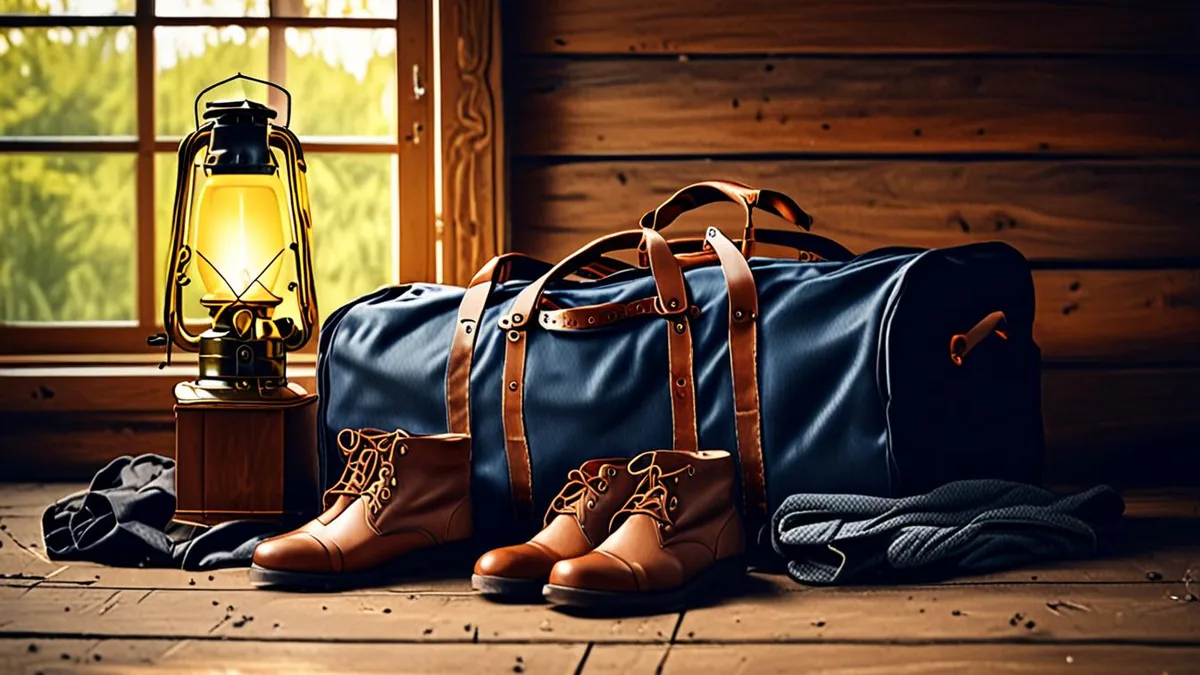
Finally, think about how you carry everything. A soft duffel bends through narrow tent doors and tucks under a low bed frame, while a hard suitcase just becomes an obstacle on gravel paths and wooden decks.
- Headlamp with a red-light mode: preserves your night vision and is less likely to disturb a sleeping partner than a bright white beam.
- Power bank of at least 10,000 mAh: enough for multiple phone recharges over a weekend, useful if your unit only has one shared outlet.
- Reusable water bottle, insulated if possible: handy for filling up on site and keeping water cool on a sunny deck or a day hike.
- Small daypack, around 15-20 liters: roomy enough for water, snacks, a waterproof jacket and sunscreen on hikes, yet light enough to forget you’re wearing it.
- Soft duffel with backpack straps: leaves your hands free for opening gates or steadying yourself on uneven ground between the parking area and your tent.
Food, Drinks and Kitchen Extras
Food planning makes or breaks a glamping trip, especially when your kitchen setup is more “camping” than “gourmet.” Most sites provide basic kitchenware, but that often means a couple of pots, a pan and mismatched utensils rather than a fully equipped kitchen. Check exactly what’s included before you shop, then build your menu around meals that need one pan, one pot or a grill, like pasta, stir-fries, sausages and foil-packet vegetables. Simple dinners mean less washing up and more time relaxing, which is the whole point of the trip. A small spice kit, cooking oil, salt and pepper take up almost no space but transform bland camp food into something you’ll actually look forward to eating.
Drinks deserve their own plan too. If your unit has no fridge, a small cooler keeps milk, juice, cheese and a few cold beers or sodas fresh for a couple of days. Bring block ice or frozen water bottles rather than loose cubes, since they melt far more slowly and double as cold drinking water once thawed.
And don’t forget the fun part. If your site has a fire pit, evenings around the flames are often the highlight of the whole trip, so pack snacks that belong there.
Seasonal Packing: Summer vs Shoulder Season Trips
What you pack for a glamping trip depends heavily on when you go. The peak season, which runs from May to October in most temperate regions, brings warm days, long evenings and lots of time outside, so sun protection and light layers should dominate your bag. Think breathable shirts, a sun hat and plenty of shade-friendly clothing for lounging on that exposed deck.
Shoulder months are a different story. Even if the daytime feels mild, nights get cold fast, and a chilly evening on the deck can end the fun early if you’re underdressed. The fix is simple: add warm accessories and thermal pieces to the same core packing list rather than replacing everything. A small beanie and a pair of gloves weigh almost nothing in your duffel, yet they can be the items you end up reaching for most on a cool evening.
Winter glamping exists too, and it can be magical, but only if you pack for genuinely cold conditions. Snow, frost and frozen ground demand serious gear, not just an extra sweater. Check with your site about heating in the unit before you decide how much to bring.
- Broad-spectrum sunscreen and a brimmed hat for summer: reapply through the day, since decks, lakes and open fields offer little natural shade.
- Beanie, gloves and thermal base layers for shoulder months: lightweight merino pieces take up almost no space but transform a cold evening into a cozy one.
- Insulated, waterproof boots for winter trips: regular sneakers won’t cut it on frozen or snowy ground, and warm feet are the difference between enjoying and enduring.
- A heavy down jacket for winter glamping: ideal for sitting outside stargazing, since indoor heating doesn’t help when you’re watching the sky.
- Seasonal quantities of repellent and sunscreen: pack full-size sunscreen and generous insect repellent for the bug-heavy peak months, and scale both down for late-season or winter trips when insects are largely gone.
Your Glamping Trip, Fully Packed
Even the most stylish tent or lodge can feel less luxurious if you arrive without something essential. The upside is that smart packing for a glamping trip is mostly about thinking one step ahead. Once you know what your host supplies on site, you can fill the gaps in your bag with confidence rather than guesswork, and you will avoid hauling gear you will never touch.
It also pays to think about timing. Popular sites fill up quickly in high season, so locking in your dates early makes the rest of the planning easier. From there, work through the checklist sections above before you zip your bag, and you will arrive with everything you need and nothing you don’t. Have a packing tip of your own, or a glamping trip coming up? Leave a comment below or share this article with a fellow traveler.