Planning a first safari often comes with a confusing question: should you book a safari lodge or a tented camp? Many travelers struggle to tell the two apart, let alone decide which one fits their budget, comfort level and wildlife goals. The difference matters, because the stay you choose shapes how close you sleep to the sounds of the bush, how many other vehicles you share a lion sighting with, and how much you pay per night.
This guide walks through the safari lodge vs tented camp decision step by step. We start by defining what each stay actually is, then compare comfort and experience, break down how price and value stack up, and look at how season and destination influence the choice. You will also find practical booking timelines, tips on what rates really include, and advice on which stay suits families, honeymooners and photographers. By the end, you should know exactly which option fits your trip.
What Defines a Safari Lodge vs a Tented Camp
The clearest way to understand the difference is to look at what is actually built on the ground. A safari lodge is a permanent property with solid walls, proper roofing and full infrastructure. Most lodges have air conditioning, swimming pools, and often 40 to 100 or more rooms, so they operate much like a full-service hotel that happens to sit in wildlife country.
A tented camp puts canvas between you and the bush instead of brick. That canvas comes in very different forms, though, which is where many travelers get confused.
The two faces of tented camps
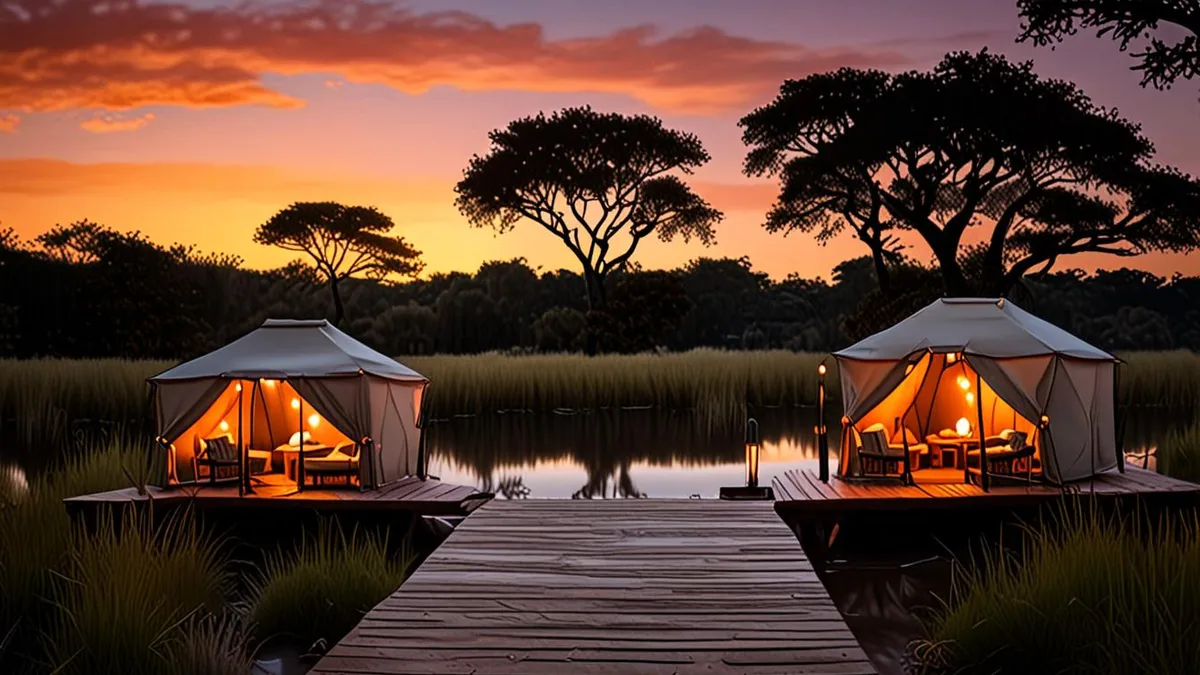
At one end of the scale are permanent tented camps: large canvas suites fixed onto concrete decks, with real beds, en-suite bathrooms and often plumbing and electricity. They stay in one place year-round and can feel surprisingly close to a hotel room, just with canvas walls. At the other end are seasonal mobile camps, which pack up and relocate to follow wildlife movements, such as the Great Migration.
Scale is the other big difference. Tented camps usually host just 10 to 20 tents, which creates a smaller, more intimate bush experience than a lodge with dozens of rooms. Fewer guests generally means quieter dinners, more personal attention from staff and guides, and a stronger sense of being out in the wilderness rather than at a resort.
Neither option is automatically better. Knowing that lodges lean toward comfort and scale while tented camps lean toward intimacy and immersion is the foundation for every other decision in this guide.
Comfort and Experience Differences
Comfort is where the two stay types diverge most clearly. Lodges offer guaranteed climate control, reliable Wi-Fi and often spa or gym facilities, so your evenings feel much like a hotel stay. Tented camps deliver something lodges cannot: a closer-to-nature experience where you may hear lions roaring or hippos grunting at night, right through the canvas walls.
The wildlife experience differs too. Small tented camps mean fewer vehicles at sightings, so a leopard in a tree might be watched by two or three vehicles instead of a dozen. Big lodges, with their larger guest numbers, can feel busier around wildlife, especially at popular sightings.
What a typical day looks like
Whichever you choose, the rhythm of a safari stay is similar. Most camps of both types include two daily game drives of roughly 3-4 hours in the rate, typically one in the early morning and one in the late afternoon when animals are most active.
- Early starts are standard: morning drives usually begin before sunrise, with coffee and a light snack served at camp before you head out.
- Bush meals are common: many camps serve breakfast or lunch outdoors, so game drives flow straight into meals without returning to your room first.
- Evenings center on the fire: guests typically gather around a campfire before dinner to compare sightings, a tradition at both lodges and tented camps.
- Midday is downtime: between the two drives, expect a long break for lunch, a nap or a pool, since wildlife is least active in the midday heat.
In short, if predictable comfort and facilities matter most, a lodge wins. If the sounds of the bush at night and quieter sightings matter more, a tented camp is hard to beat.
How Price and Value Compare
Price is often the deciding factor, and the gap between stay types is real. Mid-range safari lodges typically run $300-600 per person per night. At this level you usually get comfortable rooms and solid food, but often with more shared facilities and larger guest numbers, since lodges spread their costs across many rooms.
Luxury tented camps cost $600-1,200+ per person per night. That sounds steep, but these rates are usually fully inclusive of meals, drinks and game drives, which means fewer surprise charges at checkout. When you add up what a lodge charges separately for drinks, activities and extras, the real gap between the two can be smaller than the headline prices suggest.
Timing your booking to the calendar
Season moves prices more than stay type does. Green-season rates (November-March) can drop substantially at both lodges and tented camps, making a stay that felt out of reach in peak season suddenly affordable. The trade-off is weather: the green season brings rain, which changes wildlife viewing but brings its own rewards for birdwatchers and photographers.
When comparing quotes, look closely at what each rate actually includes. A mid-range lodge rate that excludes drinks, park fees and transfers can end up costing more than a slightly higher fully inclusive tented camp rate. Park and conservation fees are set separately and change regularly, so ask your operator for the current amount rather than relying on older quotes. Always compare like with like before deciding which option offers better value for your trip.
Choosing by Season and Destination
Season and destination shape your choice more than any brochure photo. If your heart is set on the Great Migration river crossings between July and September, you are competing with everyone else who has the same idea. Tented camps positioned near the Mara or Grumeti rivers tend to book out first, because nothing beats rolling out of bed minutes from the action.
Travel during the April-May long rains and the picture changes. Some seasonal tented camps simply close for that period, packing up until conditions improve. Permanent lodges, with solid foundations and all-weather access, generally stay open year-round, making them the safer pick for a rainy-season itinerary.
Location matters too. In Botswana, Okavango Delta camps are typically fly-in only, reached by light aircraft, which naturally favors small tented camps with short airstrip transfers. And if you can travel flexibly, the green season from November to March rewards birdwatchers and photographers at either stay type, with dramatic skies, migrant species and lower visitor numbers.
- River-crossing camps: expect the most sought-after July-September positions along the Mara and Grumeti rivers to be the first beds sold each year, often a full booking cycle ahead.
- Rainy-season closures: seasonal mobile camps in the April-May long rains may dismantle entirely, so always confirm your chosen camp operates during your travel dates.
- Okavango logistics: light aircraft transfers mean soft luggage limits and small planes, which suits compact tented camps far better than large lodge complexes.
- Green-season perks: November-March brings lush landscapes, newborn animals and migrant birds, plus softer light that photographers love, at both lodges and camps.
Booking Timeline and Practical Tips
Getting your safari stay booked comes down to timing and reading the fine print. A few simple habits will save you money and disappointment, especially when the difference between two quotes is not obvious at first glance.
- Book peak season early. For travel between June and October, reserve 9-12 months ahead. Small tented camps with under 20 tents have so few beds that they sell out long before larger lodges do, and the most sought-after positions near rivers or waterholes go first.
- Use green-season flexibility. Trips in the November to March window can usually be booked 3-6 months out, and operators are often more willing to adjust dates, room types or even camp combinations at short notice. If your schedule can shift by a week or two, ask about lower-rate windows within the same month.
- Compare like with like. Before judging any price, check whether the rate is fully inclusive or excludes park fees, drinks, laundry and transfers. Park entrance and conservation fees exist at most reserves and change regularly, so ask for the current amount rather than relying on an older quote. Two quotes that look far apart can end up nearly identical once extras are added.
- Confirm age minimums. Many small tented camps restrict children under 12, so families should verify the policy before falling in love with a particular camp. Ask whether family tents or connecting rooms exist, since availability for these is often tighter than standard units.
Once your dates are set, ask your operator to confirm everything in writing: what the rate covers, the age policy, cancellation terms and any transfer details, especially if light-aircraft hops are involved. A short email now prevents expensive surprises at check-in later.
Who Should Choose Which Stay
Matching Your Stay to Your Travel Style
There is no single right answer when choosing between a safari lodge and a tented camp, only the right fit for your travel style, budget and the kind of memories you want to bring home. Families and first-time safari-goers usually thrive at lodges, where predictable comfort, swimming pools and larger rooms make the bush feel exciting rather than challenging. Having solid walls and familiar amenities can ease any nerves about a first trip to Africa.
Honeymooners and photographers, on the other hand, often fall hardest for small tented camps, where intimacy and the sounds of the night become part of the memory. Falling asleep to distant lion calls or hippo grunts from a river is an experience no hotel room can replicate, and many travelers describe it as the highlight of their entire trip.
If you cannot decide, do not force yourself to. One of the most rewarding itineraries splits your nights between the two, giving you contrast without compromise. You get the polish of a lodge and the atmosphere of canvas, and each stay makes the other feel more special by comparison.
- Families: look for lodges with family rooms, swimming pools and fenced or supervised layouts, so kids can relax safely between the two daily game drives.
- Honeymooners: prioritize tented camps of 10-20 tents, where dinners are intimate and staff can tailor private experiences like sundowner stops for two in the bush.
- Photographers: smaller camps mean fewer vehicles at sightings, giving you cleaner frames, unhurried positioning and more time with each animal.
- Combination trips: start at a lodge to settle in comfortably, then finish at a tented camp when you are ready for full immersion, ending the trip on its most atmospheric note.
Whichever way you lean, talk to your tour operator about your priorities before booking. They can match specific properties to your group, and the right fit will shape how you remember the entire safari.
Wrapping Up Your Safari Stay Choice
So which stay suits your trip? The answer comes down to what you value most. Lodges prioritize comfort and scale, with solid walls, pools and predictable amenities. Tented camps prioritize intimacy and immersion, putting you closer to the sounds and rhythms of the bush. Neither is better overall; they simply serve different kinds of travelers.
Three factors settle the choice: your season, your budget and your group type. Traveling in the green season or with young children, or simply wanting guaranteed air conditioning, points you toward a lodge. Chasing a quieter, more atmospheric experience points you toward a small tented camp. And if you can’t decide, splitting your nights between the two gives you the best of both. Whichever you lean toward, booking 9-12 months ahead for peak season secures the best of either option. Still torn between canvas and concrete? Leave a comment with your safari plans, or share this article with a fellow traveler.